
Copyrighted Course MaterialsStandardized content updated according to course objectives.








Course
Non-Verbal Communication Skills
Non-verbal Communication Skills
Develop the ability to observe and adjust eye contact, facial expression, posture, voice and personal image in workplace communication.
Table of Contents
1. Course Overview
Messages in communication are conveyed not only through words but also through eye contact, facial expression, posture, gestures, voice and distance. When these signals are inconsistent, listeners can misunderstand or lose trust.
The course “Non-Verbal Communication Skills” helps learners observe signals in context, adjust body language and combine non-verbal elements with spoken content.
The program focuses on application in interactions with colleagues, customers and partners, presentations and situations that require professionalism.
2. Training Objectives
- Identify common groups of non-verbal signals in communication.
- Observe eye contact, facial expressions, posture and gestures in relation to context.
- Adjust body language so messages become clearer and more consistent.
- Use voice, pace and pauses appropriate to communication objectives.
- Manage distance, space and personal image in professional settings.
- Apply non-verbal communication in meetings, presentations, sales and partner interactions.
3. Target Participants
- Leaders, managers and team leadersNeed to strengthen presence and communication effectiveness when leading teams.
- Business development, sales and customer care staffFrequently communicate directly with customers and partners.
- Personnel who present, negotiate or work across departmentsNeed to convey messages confidently, consistently and professionally.
- Individuals seeking to improve their communication styleNeed to improve the ability to observe and adjust non-verbal expression.
4. Course Content
The six modules cover key non-verbal elements and how to coordinate them in specific workplace situations.
PART 01Foundations of Non-Verbal Communication
- Concepts of non-verbal communication.
- The role of non-verbal signals in communication.
- The relationship between words and body language.
- The impact of non-verbal cues on trust.
- Identify inconsistency between words and expression.
- Common errors in non-verbal expression.
- Example of misunderstanding caused by inappropriate gestures.
- Discuss real communication experiences.
PART 02Eye Contact, Facial Expression and Emotions
- Use eye contact to build trust.
- Maintain appropriate eye contact.
- Recognize emotions through facial expressions.
- Adjust expressions to context.
- Avoid eye contact that creates pressure or avoidance.
- Smiling techniques to create goodwill.
- Facial expression observation exercise.
- Practice adjusting eye contact and facial expressions.
PART 03Posture, Gestures and Body Language
- Posture that demonstrates confidence and professionalism.
- Hand gestures that support key messages.
- Control unnecessary behaviors under stress.
- Identify signs of defensiveness or low cooperation.
- Adjust body language when listening to others.
- Use space appropriately when presenting.
- Scenario: gestures reduce credibility.
- Practice observing and correcting body language.
PART 04Voice and Paralinguistic Elements
- Adjust volume according to communication space.
- Control speaking speed and pauses.
- Use intonation to create emphasis.
- Avoid a monotone and low-energy voice.
- Recognize emotions through vocal tone.
- Breathing techniques to stabilize the voice.
- Example of voice causing misunderstanding of attitude.
- Voice practice exercise in workplace situations.
PART 05Distance, Space and Personal Image
- Understand appropriate communication distance.
- Respect others’ personal space.
- Arrange seating positions for conversations.
- Adjust distance according to culture and hierarchy.
- Dress and demeanor that create impressions.
- Manage personal items during communication.
- Scenario: distance creates discomfort.
- Practice arranging conversation space.
PART 06Applying Non-Verbal Communication at Work
- Apply in meetings, reporting and presentations.
- Observe signals from customers and colleagues.
- Combine words and behavior consistently.
- Adjust non-verbal cues during conflict.
- Increase persuasiveness through presence.
- Receive feedback to improve demeanor.
- Create a non-verbal communication checklist.
- Commit to applying the tools in daily work.
5. Training Methodology
Classes are conducted in small groups with a learner-centered approach. The facilitator provides concise input, then guides discussion, scenario practice, feedback and debriefing so participants can convert knowledge into applicable workplace behavior.
Group Discussion
Individual Exercises
Group Presentations
Brainstorming Techniques
Facilitated Practice
Experiential Projects
In-Class Activities
Role-Play Activities
Class Presentations
6. Class Information
| Expected Opening | Schedule | Time | Location | Tuition Fee | Register |
|---|---|---|---|---|---|
| To be updated | Saturday – Sunday | 08:30 – 16:30 | Ho Chi Minh City | 4.500.000 VND | Register |
| To be updated | Monday – Thursday | 18:00 – 21:30 | Hanoi | 4.500.000 VND | Register |
10% discount for registration at least 15 days in advance, groups of three or more learners, or loyal clients.Reserve a Seat
Note: The opening schedule above is tentative and may be adjusted depending on registration numbers, class organization conditions and the actual training plan. Masterskills will confirm the official schedule with learners before the start date.
- Duration: 2 days / 4 sessions; maximum 35 learners per class.
- Ho Chi Minh City: 224 Dien Bien Phu Street, Ban Co Ward, Ho Chi Minh City.
- Hanoi: 51 Le Dai Hanh Street, Hai Ba Trung Ward, Hanoi.
- In-house corporate training: Delivered at the client’s office or factory; quotation depends on design scope, location and class size.
- Additional costs: Trainer travel and accommodation costs are determined according to the delivery location, if applicable.
7. Learning Materials & Certification
Learners receive copyrighted course materials developed by Masterskills, practice handouts, self-assessment forms and reference materials closely aligned with business situations.
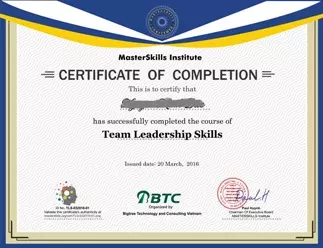
Certificate of Completion
Learners who meet attendance and practice requirements receive a Masterskills certificate of completion.
8. Faculty Team
Masterskills faculty and experts have practical management, consulting and training experience in fields aligned with the program content.

Dr. Thai Tri Dung
Human resource management and behavioral psychology expert. Leadership, managerial psychology, negotiation, culture and organizational behavior.

MBA. Paul Huynh
Leadership and capability development expert. Management skills, critical thinking, execution leadership and coaching.
9. Masterskills Profile
Masterskills’ training capabilities, areas of expertise, delivery methodology and experience partnering with organizations.
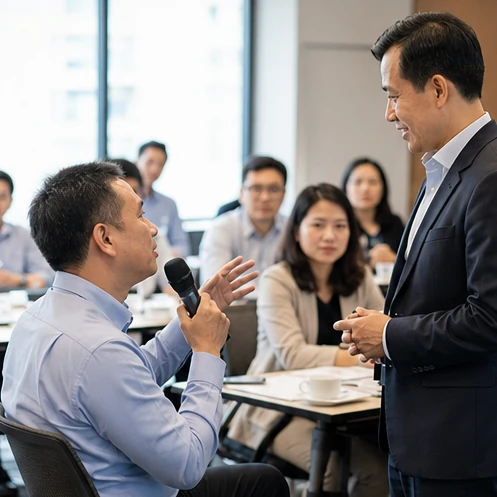
Client Testimonials
View More Client Testimonials“The non-verbal communication skills course offers practical content, workplace-focused exercises and clear facilitation. The facilitator helps learners use appropriate tools, analyze situations and build solutions that can be applied after the program.”
10. Representative Clients
Several real training programs with content close to this course topic have been delivered by Masterskills for corporate clients.
.webp) Communication Skills for Production TeamsDopla Asia Company - Vung Tau
Communication Skills for Production TeamsDopla Asia Company - Vung Tau
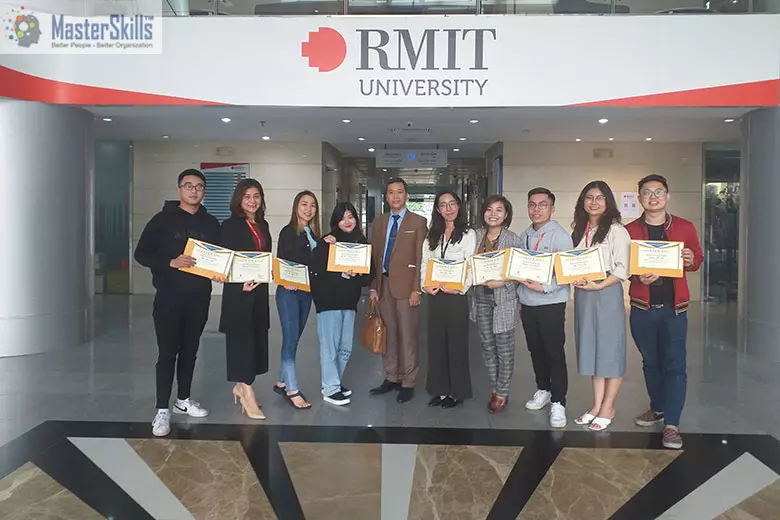 Customer Psychology & BehaviorRMIT University – Ho Chi Minh City
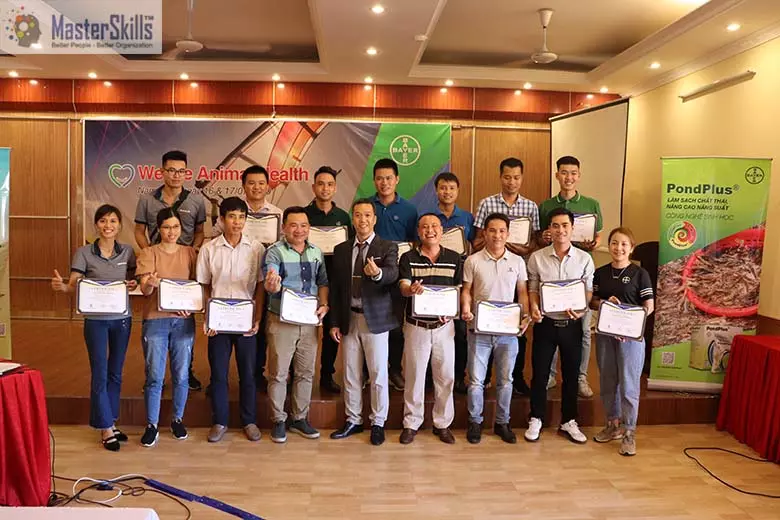 Customer Psychology & BehaviorBayer Vietnam Company – Nam Dinh
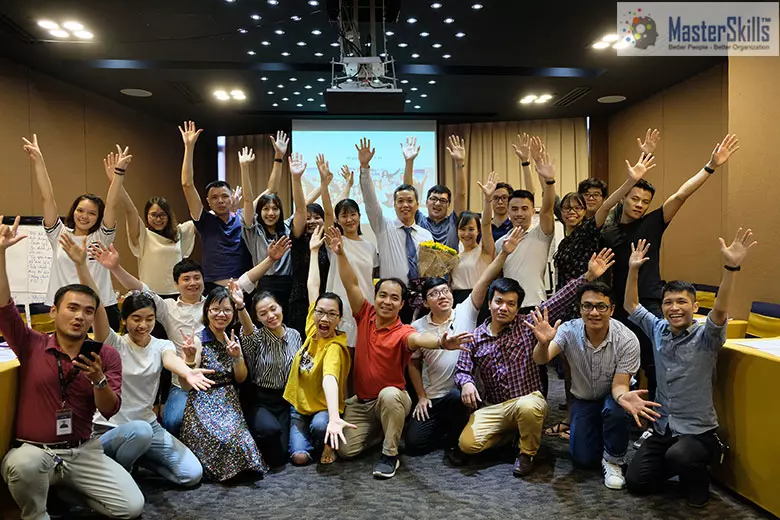 B2B Customer Psychology & BehaviorE-Soft Vietnam Company - Ho Chi Minh City
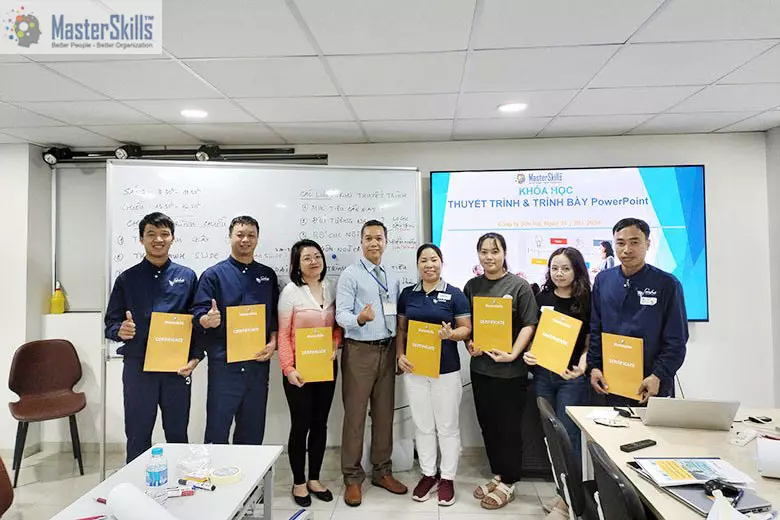 Presentation SkillsSon Ha Flavoring Company - Ho Chi Minh City
Customer Psychology & BehaviorBayer Vietnam Company - Nam Dinh
Presentation SkillsSon Ha Flavoring Company - Ho Chi Minh City
Customer Psychology & BehaviorBayer Vietnam Company - Nam Dinh
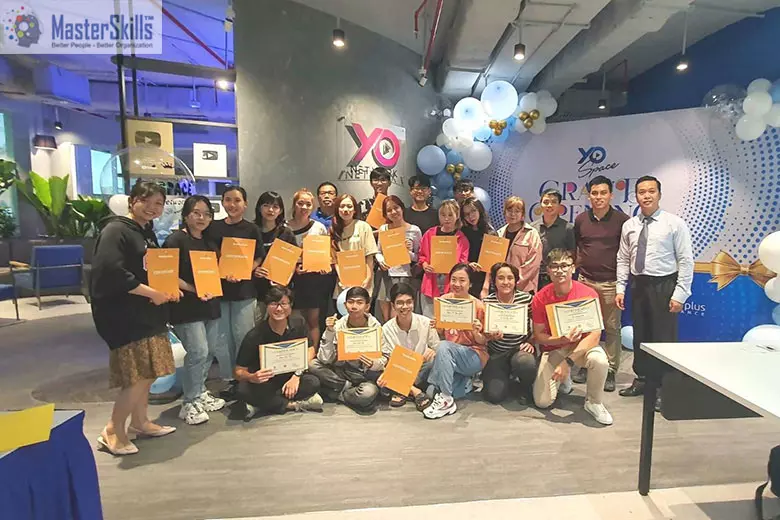 Communication and Emotional Control SkillsTuoi Tre Telecommunications Joint Stock Company – Ho Chi Minh City
.webp) Presentation SkillsLien A Chau Trading Investment Company – Ho Chi Minh City
Presentation SkillsLien A Chau Trading Investment Company – Ho Chi Minh City
Related Courses

Customer Service CommunicationDevelop practical capability in customer service communication through real-world scenarios.

Communication and Interpersonal SkillsDevelop capabilities skills communication & behavior through case practical.

Presentation SkillsDevelop practical capability in presentation skills through real-world scenarios.

Communication in Multicultural EnvironmentsDevelop practical capability in communication in multicultural environments through real-world scenarios.

Social Media CommunicationDevelop practical capability in social media communication through real-world scenarios.

Sales CommunicationDevelop practical capability in sales communication through real-world scenarios.
Ready to develop non-verbal communication skills for your team?
Masterskills experts are ready to advise on the non-verbal communication skills program aligned with your business objectives.