
Proprietary Course MaterialsStandardized content updated in line with the course objectives.






Course
Effective Email Writing Skills
Effective Email Writing Skills
Enable participants to write business emails with clear objectives, sound structure, recipient-appropriate language, and a strong focus on required action.
Table of Contents
1. Course Overview
Business email does more than convey information; it also reflects the sender's thinking, accountability, and professional image. A lengthy email without a clear purpose or explicit request can delay decisions, create unnecessary exchanges, and cause misunderstandings among stakeholders.
The course “Effective Email Writing Skills” guides participants in defining objectives and recipients, crafting subject lines, organizing content, selecting an appropriate tone, and presenting requests clearly. The program also addresses reminders, refusals, delayed responses, difficult messages, and long email threads.
Participants edit common workplace emails, receive feedback, and standardize reusable templates. The intended outcome is concise, courteous, actionable email that reduces unnecessary rounds of communication.
2. Learning Objectives
- Clearly define the objective, recipients, and expected outcome before drafting an email.
- Write subject lines and openings that help recipients understand the context quickly.
- Organize content logically and concisely, with a clear statement of the required action.
- Select wording, tone, and formality appropriate to each professional relationship.
- Handle reminder emails, refusals, sensitive responses, and the communication of unfavorable news.
- Edit, review, and standardize frequently used workplace email templates.
3. Target Participants
- Office Staff and Functional SpecialistsThose who regularly communicate, report, or coordinate work by email.
- Managers and Team LeadersThose who need to assign work, provide feedback, follow up on progress, and communicate decisions clearly.
- Sales and Customer Service PersonnelThose who communicate with customers, partners, and other stakeholders by email.
- Early-Career ProfessionalsThose seeking to establish professional email-writing standards from the outset.
4. Course Outline
PART 01Foundations of Business Email Communication
- The role of email in business communication.
- Differences between email and instant messaging.
- Effective email is designed to prompt clear action.
- Adopting a recipient-centered mindset before writing.
- Principles of brevity, accuracy, and professionalism.
- Common business-email writing mistakes.
- Scenario: a lengthy email receives no response.
- Discussion: current email-writing challenges.
PART 02Defining Email Objectives and Recipients
- Clarify the purpose before writing.
- Identify primary recipients and relevant stakeholders.
- Distinguish among notification, request, and response emails.
- Select an appropriate level of detail for the recipient.
- Define the desired action following the email.
- Tool: email objective map.
- Example: an email to a manager and colleagues.
- Exercise: analyze the objective of a sample email.
PART 03Structuring Clear, Actionable Emails
- Write concise subject lines aligned with the purpose.
- Open the email appropriately for the context.
- Present content in a logical sequence.
- State the request, deadline, and responsible person.
- Use bullet points where appropriate.
- Close the email with the next action.
- Scenario: the recipient overlooks the main request.
- Practice: write an email using a standard structure.
PART 04Professional Email Language and Tone
- Use concise, clear, and courteous sentences.
- Avoid negative emotion in written language.
- Adjust the tone to suit the recipient.
- Express feedback, reminders, and refusals appropriately.
- Use positive, solution-oriented language.
- Technique: be direct while remaining respectful.
- Example: a progress reminder that avoids undue pressure.
- Exercise: rewrite an unprofessional email.
PART 05Email Management and Difficult Situations
- Use CC and BCC appropriately.
- Attach clearly named documents in the correct version.
- Respond within an appropriate timeframe.
- Handle complaint or high-tension emails.
- Avoid long, unfocused email threads.
- Technique: summarize and confirm the action.
- Scenario: misunderstanding caused by an unclear email.
- Practice: respond to a difficult email scenario.
PART 06Standardizing Practice and Improving Email Effectiveness
- Establish a checklist before sending email.
- Standardize email signatures and formatting.
- Develop templates for frequently used emails.
- Track responses and follow-up actions.
- Learn from ineffective emails.
- Maintain professional email-writing habits.
- Commitment: three actions after the course.
- Final exercise: complete a set of workplace emails.
5. Training Methodology
Classes are delivered in small, learner-centered groups. Instructors provide concise input, then facilitate discussions, scenario-based practice, feedback, and reflection so participants can translate knowledge into practical workplace behaviors.
Group Discussions
Individual Exercises
Group Presentations
Brainstorming Techniques
Guided Practice with the Instructor
Experiential Projects
In-Class Activities
Role-Playing Activities
Class Presentations
6. Class Information
| Expected Start Date | Schedule | Class Hours | Location | Tuition Fee | Register |
|---|---|---|---|---|---|
| To Be Announced | Saturday – Sunday | 08:30 – 16:30 | Ho Chi Minh City | VND 4,500,000 | Register |
| To Be Announced | Monday – Thursday | 18:00 – 21:30 | Hanoi | VND 4,500,000 | Register |
10% discount for registration at least 15 days in advance, groups of three or more participants, or returning clients.Reserve a Seat
Note: The schedule above is provisional and may be adjusted based on enrollment, class arrangements, and the actual training plan. Masterskills will confirm the official schedule with participants before the course begins.
- Duration: 2 days / 4 sessions; maximum 35 participants per class.
- Ho Chi Minh City: 224 Dien Bien Phu Street, Ban Co Ward, Ho Chi Minh City.
- Hanoi: 51 Le Dai Hanh Street, Hai Ba Trung Ward, Hanoi.
- Corporate in-house training: Delivered at the client's office or factory; pricing depends on the design scope, location, and class size.
- Additional costs: Instructor travel and accommodation costs are determined by the delivery location, where applicable.
7. Learning Materials & Certification
Participants receive proprietary course materials developed by Masterskills, practical handouts, self-assessment forms, and reference materials aligned with real business situations.
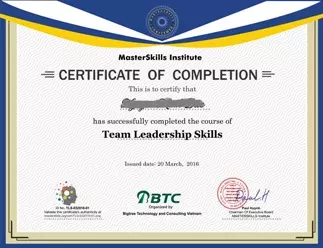
Course Completion Certificate
Participants who meet the attendance and practical requirements receive a Masterskills certificate of program completion.
8. Faculty
Masterskills instructors and experts bring practical management, consulting, and training experience relevant to the program content.

MBA. Vũ Lai Đoan Trang
Human resources development and leadership expert specializing in leadership development, learning and development, customer service, and organizational operations.

MBA. Đinh Tiến Dũng
Human resources management and quality systems expert specializing in HR management, ISO, quality systems, and leadership skills.
9. Masterskills Corporate Profile
An overview of Masterskills' training capabilities, areas of expertise, delivery methodology, and experience partnering with organizations.
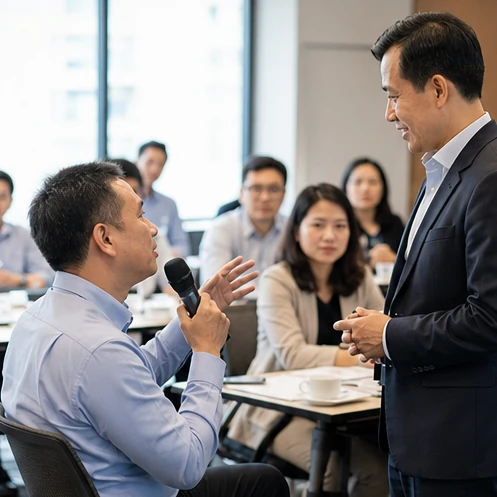
Client Testimonials
View More Client Testimonials“The Effective Email Writing Skills course offers practical content, workplace-relevant exercises, and clear facilitation. The instructor helps participants use appropriate tools, analyze situations, and develop solutions they can apply after the program.”
10. Selected Clients
Masterskills has delivered a number of corporate training programs with content closely related to this course topic.
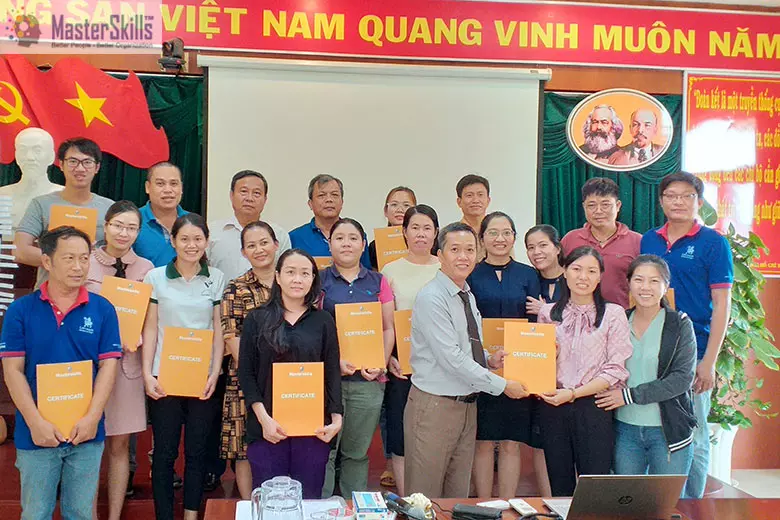 Report and Email Writing SkillsHa Tien 1 Cement Company – Long An Province
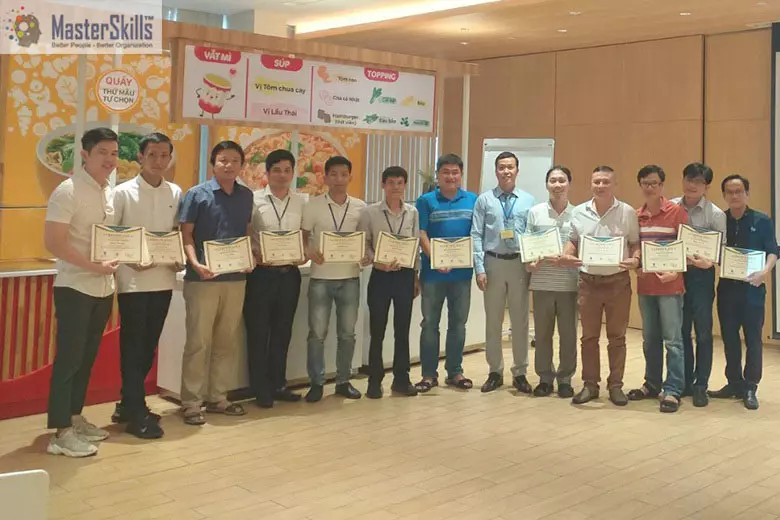 Risk Management & Information SecurityAcecook Vietnam – Ho Chi Minh City
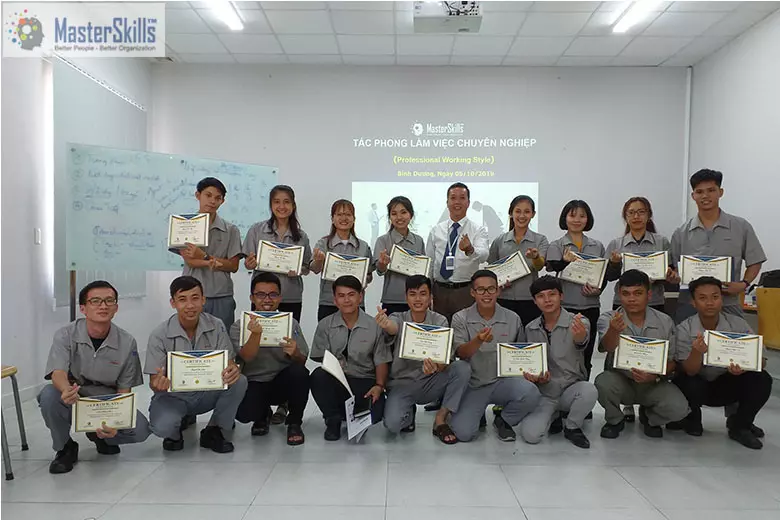 Professional Work PracticesDongil Rubber Belt Vietnam – Ho Chi Minh City
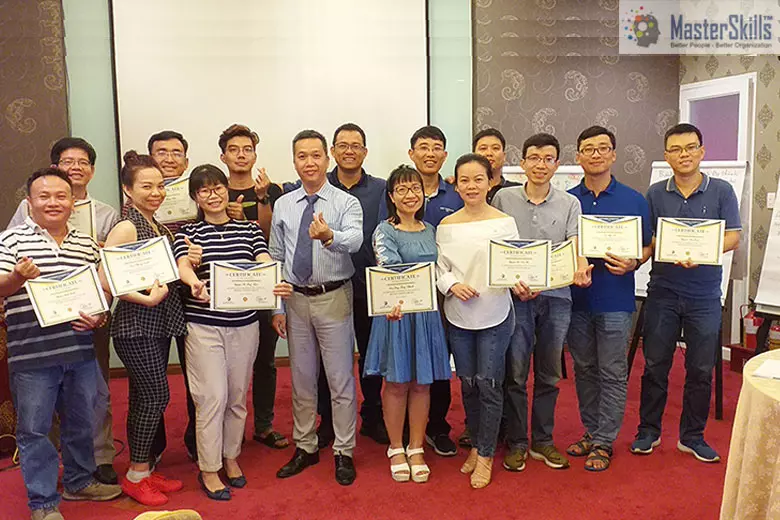 Report Writing SkillsNam Con Son Gas Processing Plant – Ho Chi Minh City
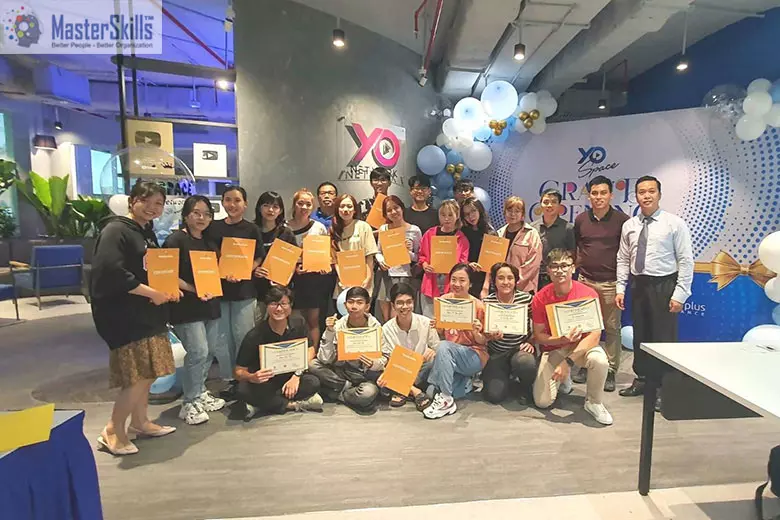 Communication Skills & Emotional RegulationTuoi Tre Telecommunications Joint Stock Company – Ho Chi Minh City
.webp) Industrial Maintenance Management (TPM)ABB Vietnam – Bac Ninh
Industrial Maintenance Management (TPM)ABB Vietnam – Bac Ninh
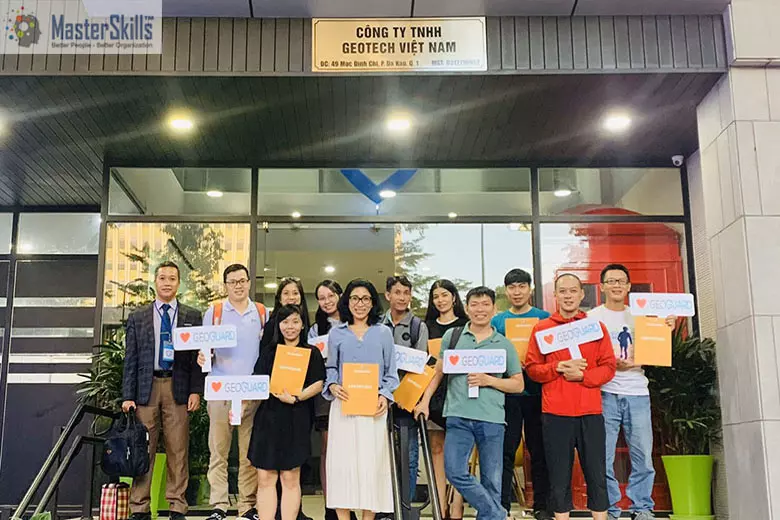 Professional Management SkillsGeoTech Vietnam – Ho Chi Minh City
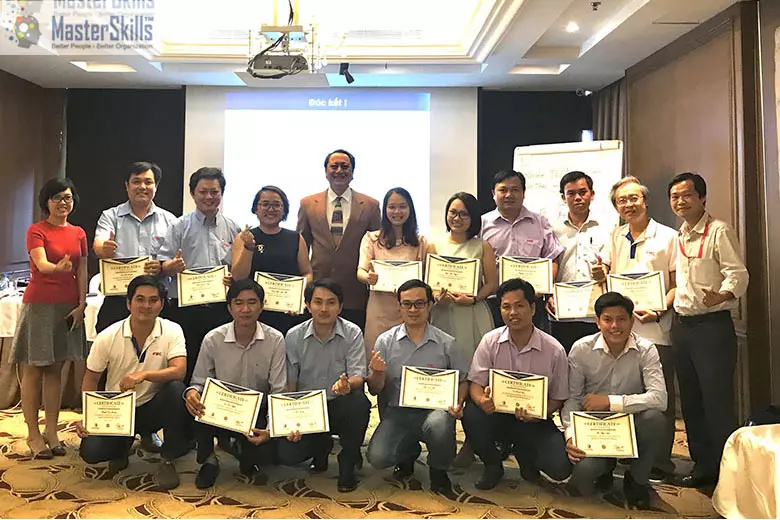 Professional Sales Team SupervisionFMC Vietnam – Ho Chi Minh City
Related Courses

Report Writing SkillsDevelop report-writing skills through practical scenarios.

Customer Service CommunicationDevelop customer service communication capability through practical scenarios.

Communication and Interpersonal SkillsDevelop communication and interpersonal skills through practical scenarios.

Cross-Cultural CommunicationDevelop cross-cultural communication capability through practical scenarios.

Nonverbal Communication SkillsDevelop nonverbal communication skills through practical scenarios.

Social Media CommunicationDevelop social media communication capability through practical scenarios.
Ready to strengthen your team's effective email writing skills?
Masterskills experts are ready to advise you on an Effective Email Writing Skills program aligned with your organization's objectives.